
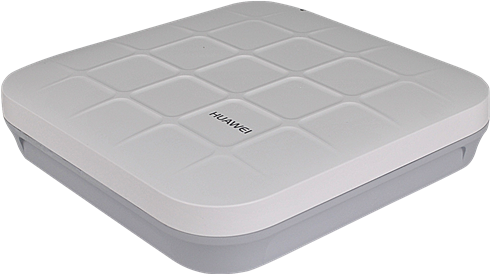
AP5050DN-S

- 763 412 7282
- +86 010 69614620
AP5050DN-S Overview
Specify the radio configuration separately for each band
The exact AP5050DN-S characteristics list 2.4 GHz 3×3 and 5 GHz 4×4 working simultaneously. This is an 802.11ac Wave 2 model, but its two radio configurations should not be replaced by a uniform 4×4 label. Match client capability, channel policy and planned traffic to the relevant band. The manufacturer provides a radio-channel reference table rather than a guarantee of application throughput for every client and deployment.
Agree the Ethernet aggregation arrangement before commissioning
Huawei describes two Ethernet interfaces supporting link aggregation and traffic load balancing to maintain link reliability. The hardware layout names GE0/PoE and GE1 as 10/100/1000M interfaces; only GE0/PoE is identified as accepting PoE input. Confirm the AP software, upstream switch and intended aggregation configuration together. Two physical connections do not by themselves prove that the required switch configuration or failover behavior is already present.
Budget the USB output beyond the 19.7 W AP reference
The USB2.0 port supports a flash drive or other storage device for expansion, and the characteristics also mention external power through USB. Huawei lists 19.7 W AP maximum consumption excluding that USB output, with actual maximum subject to local laws and regulations. Verify the attached device, software support and supplied power budget. The cited chapter does not define a fixed USB-output wattage, and the consumption reference should not be treated as the total for every accessory load.
Use the documented 802.3at source and the 12 V alternative
AP5050DN-S lists 12 V ±10% DC or IEEE 802.3at PoE. The exact power-input table does not list 802.3af, so an af-capability promise is not imported from AP4050 or AP5030 products. Confirm the planned switch allocation and any DC adapter or mains lead in the quotation. Input alternatives alone do not establish a particular supply priority or guaranteed uninterrupted transfer between sources.
Choose Fat, Fit or cloud operation with a realistic acceptance load
The characteristics support Fat, Fit and cloud operation and describe SDN-controller management and maintenance. The hardware user reference is up to 256, explicitly qualified by the environment, with 16 VAPs per radio. That table does not provide a separate 512-user promise for these modes. Verify the controller/software mapping, delivered image state, country configuration and any cloud entitlement before a site client-load test.
Match the 56 mm enclosure and regional radio settings
The hardware reference is 56 × 220 × 220 mm in height, width and depth, 1.3 kg weight, IP41 and 5–95% non-condensing humidity. The manufacturer temperature range is −10°C to +50°C at −60–1800 m; above 1800 m through 5000 m, the upper limit falls 1°C per 300 m. Antenna gains are 4 dBi on each listed band, with combined transmit references of 25 dBm at 2.4 GHz and 26 dBm at 5 GHz, subject to regional limits. Verify the delivered hardware and site conditions; the USA notice fixes the delivered country code.
Document/Firmware Download
AP5050DN-S Specification
| Exact model | AP5050DN-S |
| Wireless generation | 802.11ac Wave 2 |
| Band-specific MIMO | 2.4 GHz 3×3; 5 GHz 4×4, simultaneous operation |
| Ethernet interfaces | GE0/PoE and GE1: 10/100/1000M |
| Documented Ethernet functions | Link aggregation and traffic load balancing; verify the configuration with the upstream switch |
| PoE input location | GE0/PoE only in the exact interface description |
| DC/PoE input | 12 V ±10% DC or IEEE 802.3at |
| Maximum AP consumption | 19.7 W excluding USB output; regional conditions apply |
| USB interface | USB2.0 storage expansion; external output power reviewed separately |
| Management modes | Fat, Fit and cloud; SDN controller management described |
| User/VAP references | Up to 256 users, environment-dependent; 16 VAPs per radio |
| Dimensions H × W × D | 56 × 220 × 220 mm |
| Reference weight | 1.3 kg |
| Indoor limits | IP41; humidity 5–95% non-condensing |
| Operating temperature/altitude | −10 to +50°C at −60–1800 m; above 1800 m derate 1°C per 300 m through 5000 m |
| Antenna references | Built-in omnidirectional dual-band; 4 dBi each band |
| Combined transmit references | 2.4 GHz 25 dBm; 5 GHz 26 dBm; local limits |
| Country scope | USA delivered country code fixed; check intended-region configuration |
| Maintenance/security | Console, reset button and security slot |
AP5050DN-S Warranty
 | Product Quotation |  | Condition and Packaging |
 | Return Eligibility |  | Returns and Replacement |
 | Shipping Arrangements |  | Warranty Terms |
AP5050DN-S FAQ
What is AP5050DN-S?
AP5050DN-S is a HUAWEI AP5000 Series Access Points product supplied by YYST Global for enterprise IT procurement and infrastructure projects.
What wireless generation is listed for AP5050DN-S?
For AP5050DN-S, the manufacturer specification lists wireless generation as 802.11ac Wave 2.
What band-specific mimo is listed for AP5050DN-S?
For AP5050DN-S, the manufacturer specification lists band-specific mimo as 2.4 GHz 3×3; 5 GHz 4×4, simultaneous operation.
What interfaces and ports does AP5050DN-S provide?
For AP5050DN-S, the manufacturer specification lists ethernet interfaces as GE0/PoE and GE1: 10/100/1000M.
Is AP5050DN-S available from YYST Global?
Contact YYST Global to confirm availability for AP5050DN-S, the required quantity, exact configuration, delivery destination and current lead time before ordering. A product listing does not confirm current inventory.
Related products
Related AP5050DN-S
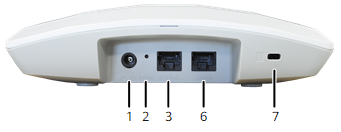
Huawei AP5010DN-AGN-DC Access Point Bundle
Huawei AP5010DN-AGN-DC is the AP5010DN-AGN access-point bundle mapped to part number 02358264 in Huawei’s Hardware Center. Its order description includes an AC/DC adapter, an indoor 802.11n dual-frequency 2×2 AP and a built-in antenna. The mainframe-only 02355547 is a separate order without an adapter. For the AP5010DN-AGN hardware inside the bundle, Huawei documents Gigabit ETH/PoE and console connections, 12 V ±10% DC or IEEE 802.3af/at input, and a 9.5 W maximum-consumption reference. Verify the supplied adapter and regional configuration. The image is a shared manufacturer interface illustration, not a photograph of the offered bundle contents.
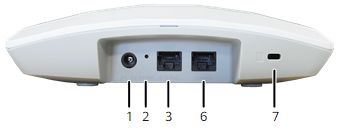
Huawei AP5010DN-AGN Indoor Access Point
Huawei AP5010DN-AGN is an indoor 802.11n access point. Its manufacturer mainframe order reference is 02355547: dual-frequency 2×2, a built-in antenna and no AC/DC adapter. The hardware illustration for this model group identifies an ETH/PoE Gigabit Ethernet connection and a console port. The basic specification table assigns AP5010DN-AGN a 9.5 W maximum-consumption reference and allows 12 V ±10% DC or IEEE 802.3af/at power. The 02358264 bundle is a separate ordering line with an AC/DC adapter. The displayed image is Huawei’s shared interface illustration for the named AP3010/AP5010/AP6010 models, not a supplied-unit photograph.
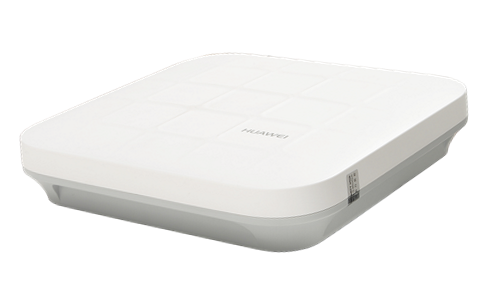
AP5030DN
Huawei AP5030DN is an indoor 802.11ac access point with 3×3 MIMO, simultaneous 2.4 GHz/5 GHz service and built-in omnidirectional antennas. It provides a GE0/PoE input and a separate GE1 Gigabit Ethernet data port. The exact model supports a Fit AP plus bridge hybrid arrangement. Huawei lists DC 12 V or IEEE 802.3af/at and a 12.95 W maximum consumption reference, qualified by local rules. Fit and Fat user references are 256 and 64; the 2.4 GHz radio does not support 40 MHz in FCC regions.
AP5030DN-S
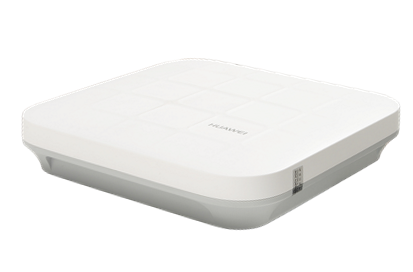
Huawei AP5030DN-S is an indoor dual-band IEEE 802.11ac access point with 3×3 MIMO. It serves 2.4 GHz and 5 GHz simultaneously through built-in omnidirectional antennas and uses one Gigabit GE0/PoE wired connection. Huawei lists up to 256 users in Fit mode and 64 in Fat mode, so the management choice changes the reference client limit. Power is supplied through IEEE 802.3af/at PoE or 12 V DC; confirm software, country configuration and accessories with the quote.
Huawei AP5010SN-GN-DC 02358263 Single-Frequency Indoor AP
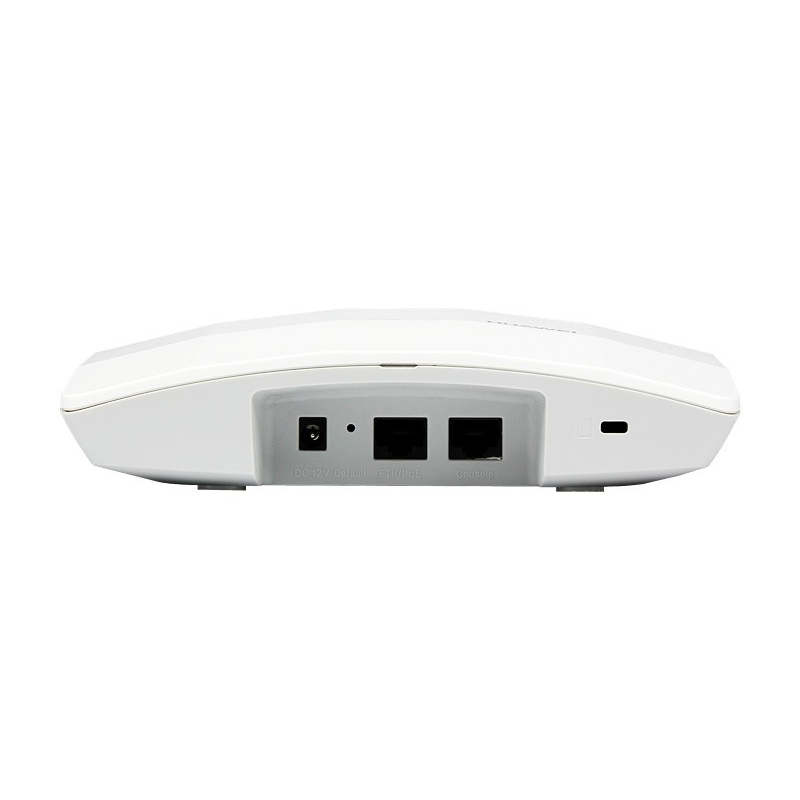
Huawei AP5010SN-GN-DC, part number 02358263, is an indoor 802.11n 2x2 single-frequency access-point bundle with built-in antennas and an AC/DC adapter.
AP5130DN
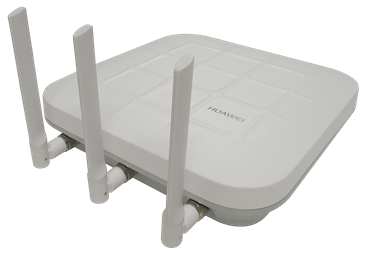
Huawei AP5130DN is an indoor 802.11ac access point with 3×3 MIMO, simultaneous 2.4 GHz/5 GHz service and external dual-band antennas using RP-SMA-K connections. It provides GE0/PoE and GE1 Gigabit Ethernet ports; only GE0/PoE is identified as accepting PoE input. Huawei lists 12 V DC or IEEE 802.3af/at power and a 12.95 W maximum consumption reference. Fit and Fat user references differ: up to 256 and 64 respectively. In FCC regions, the 2.4 GHz radio does not support 40 MHz bandwidth.