
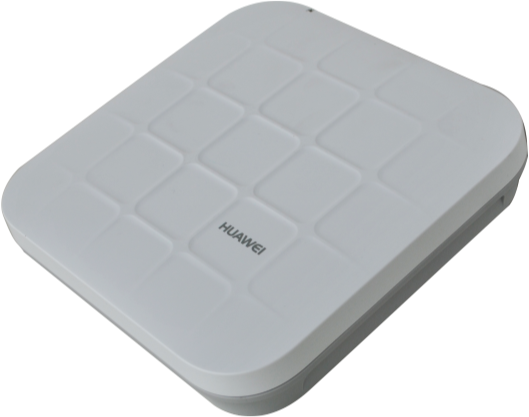
AP4030TN

- 763 412 7282
- +86 010 69614620
AP4030TN Overview
Assign roles to the flexible three-radio layout
The AP4030TN characteristics distinguish one radio supporting only 5 GHz from two radios supporting 2.4 GHz and 5 GHz. They describe flexible switchover and a 2.4G plus dual-5G arrangement. One radio can be assigned to WIDS, Wi-Fi terminal location or spectrum analysis to reduce the effect of those services on coverage. Define which radios provide access, bridging or monitoring in the intended software configuration; a three-radio label does not establish three identical fixed-band client radios.
Plan the hybrid Fit AP and bridge arrangement
Huawei documents AP4030TN for electronic classrooms, high-density sites, shopping malls and supermarkets, and describes a Fit AP plus bridge hybrid mode. The hardware table separately gives user references of up to 384 in Fit mode and 96 in Fat mode, with 16 VAPs per radio. Choose the management and forwarding arrangement before setting the acceptance load. These are manufacturer mode references rather than guaranteed active-user capacity for every application mix.
Budget the USB output separately from the AP
The USB port can connect a flash drive for storage expansion and provides a maximum of 2.5 W output. Huawei lists 21.5 W maximum AP consumption excluding that USB output, with the actual maximum subject to regional rules. Treat the USB device and its power requirement as separate design items. Confirm the connected storage, software support and upstream power allocation rather than assuming the AP consumption reference includes every attached USB load.
Keep the wired ports and power inputs distinct
GE0/PoE and GE1 both provide 10/100/1000M Ethernet connectivity; only GE0/PoE is identified as accepting PoE input in the exact port description. A console connection supports configuration and maintenance. The hardware chapter lists 12 V ±10% DC input or IEEE 802.3at PoE. Agree any dual-input priority and transfer-continuity requirements against delivered-unit documentation; the cited power-input table does not establish an automatic hot-backup commitment. Specify adapter and cable scope separately in the order.
Check the indoor enclosure and site limits
AP4030TN measures 53 × 220 × 220 mm in height, width and depth, weighs 0.86 kg and is rated IP41. Its operating temperature is −10°C to +45°C at −60 to 1800 m; from 1800 to 5000 m, the temperature limit decreases by 1°C per 300 m rise. Humidity is 5–95% non-condensing and storage temperature is −40°C to +70°C. Select indoor mounting and location to meet those conditions rather than treating the AP as a sealed outdoor unit.
Confirm regional radio settings and measured performance
The exact model uses built-in omnidirectional antennas, with reference gain of 5 dBi on the listed 2.4 GHz and 5 GHz bands. Combined transmit references are 23 dBm per band, subject to local limits. The hardware channel-rate table reaches 300 Mbit/s for 802.11n and 867 Mbit/s for 802.11ac; these are not application throughput guarantees. Confirm country configuration, installed software, radio roles, USB scope, power and delivered condition, then test the planned traffic during acceptance.
Document/Firmware Download
AP4030TN Specification
| Exact model | AP4030TN |
| Wireless standard and MIMO | IEEE 802.11a/b/g/n/ac; 2×2 MIMO |
| Three-radio architecture | One 5 GHz-only radio; two radios support 2.4 GHz and 5 GHz |
| Flexible radio use | 2.4G plus dual-5G access; monitoring services can use one radio |
| Documented hybrid mode | Fit AP plus bridge |
| Copper data ports | GE0/PoE and GE1: 10/100/1000M Ethernet |
| PoE input location | GE0/PoE accepts PoE input |
| USB role and output | Storage expansion with USB flash drive; maximum output 2.5 W |
| Power input | 12 V ±10% DC or IEEE 802.3at PoE |
| Maximum AP consumption | 21.5 W excluding USB output; regional conditions apply |
| Power-continuity scope | Verify dual-input priority and transfer behavior against delivered documentation |
| Dimensions H × W × D | 53 × 220 × 220 mm |
| Reference weight | 0.86 kg |
| Indoor enclosure and humidity | IP41; 5–95% non-condensing |
| Temperature and altitude | −10 to +45°C at −60–1800 m; derate 1°C per300 m at1800–5000 m; storage−40 to+70°C |
| Mode-specific user and VAP references | Fit ≤384 users; Fat ≤96 users; 16 VAPs per radio |
| Antenna and transmit references | Built-in omnidirectional;5 dBi on each listed band;combined23 dBm each band, regional limits apply |
| Channel-rate references | 802.11n up to300 Mbit/s;802.11ac up to867 Mbit/s; not application throughput |
AP4030TN Warranty
 | Product Quotation |  | Condition and Packaging |
 | Return Eligibility |  | Returns and Replacement |
 | Shipping Arrangements |  | Warranty Terms |
AP4030TN FAQ
What is AP4030TN?
AP4030TN is a HUAWEI AP4000 Series Access Points product supplied by YYST Global for enterprise IT procurement and infrastructure projects.
What wireless standard and mimo is listed for AP4030TN?
For AP4030TN, the manufacturer specification lists wireless standard and mimo as IEEE 802.11a/b/g/n/ac; 2×2 MIMO.
What three-radio architecture is listed for AP4030TN?
For AP4030TN, the manufacturer specification lists three-radio architecture as One 5 GHz-only radio; two radios support 2.4 GHz and 5 GHz.
What flexible radio use is listed for AP4030TN?
For AP4030TN, the manufacturer specification lists flexible radio use as 2.4G plus dual-5G access; monitoring services can use one radio.
Is AP4030TN available from YYST Global?
Contact YYST Global to confirm availability for AP4030TN, the required quantity, exact configuration, delivery destination and current lead time before ordering. A product listing does not confirm current inventory.
Related products
Related AP4030TN
AP4030DN
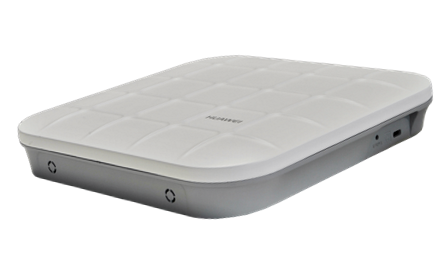
Huawei AP4030DN is an indoor dual-band IEEE 802.11ac access point with 2×2 MIMO. It serves 2.4 GHz and 5 GHz clients simultaneously and supports a Fit AP plus bridge hybrid arrangement. A single GE/PoE port connects the wired Ethernet and accepts PoE input; a separate console supports maintenance. The exact hardware chapter lists 12 V DC or IEEE 802.3af/at PoE and a region-qualified maximum power reference of 10.2 W. Fit and Fat user references differ: up to 256 and 64 respectively.
AP4030DN-E Huawei AP4000 Dual-band 802.11ac Access Point
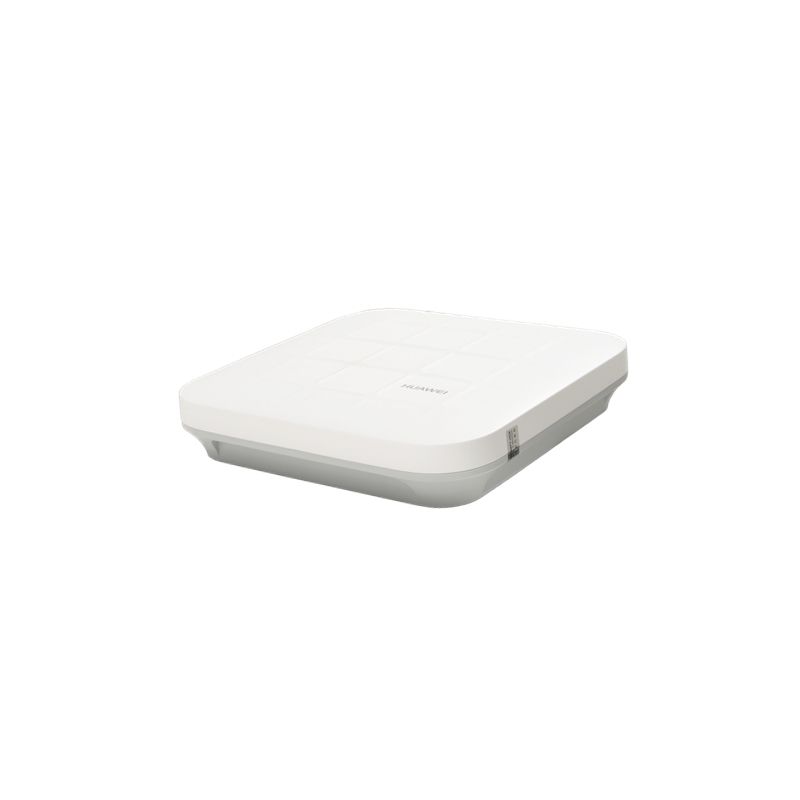
Huawei AP4030DN-E is an indoor Wi-Fi 5 AP with 2x2 MIMO at 2.4 GHz, 3x3 at 5 GHz and two Gigabit ports. GE0 accepts PoE; 12 V DC has priority. Verify standalone versus adapter bundle.
AP4050DE-B-S
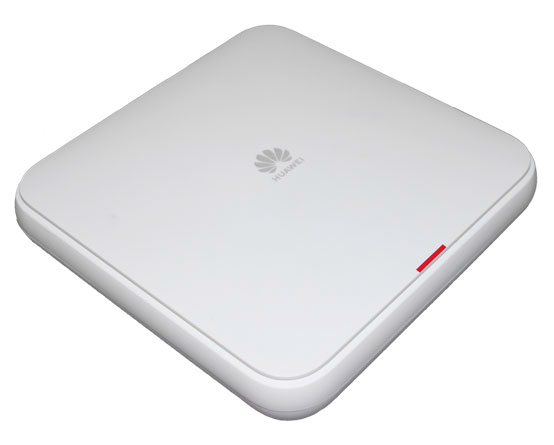
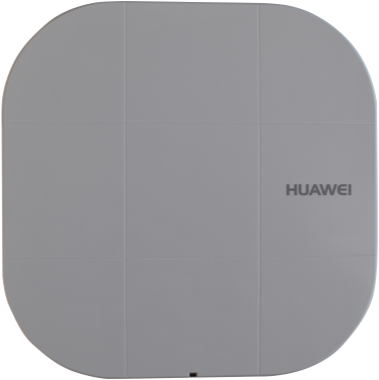
Huawei AP4050DE-B-S is an indoor 802.11ac Wave 2 access point with 2×2 MU-MIMO, two spatial streams, concurrent 2.4 GHz/5 GHz service and built-in smart antennas. Built-in Bluetooth supports positioning with eSight. The exact B-S hardware chapter lists 14.05 W maximum consumption and 23 dBm combined transmit references on each band, with regional conditions; these differ from the AP4050DE-M chapter’s 16.40 W and 27 dBm references. It supports Fat, Fit and cloud modes and DC 12 V or IEEE 802.3af/at PoE input. The manufacturer image is a Series family appearance reference; verify the supplied model label.
AP4051DN
Huawei AP4051DN is an indoor 802.11ac Wave 2 access point with 2×2 MIMO, two spatial streams and simultaneous 2.4 GHz/5 GHz service. Both GE0/PoE_IN and GE1/PoE_IN are Gigabit Ethernet inputs supporting PoE; Huawei describes dual-port power backup. Its USB2.0 interface supports storage expansion. The exact hardware table lists 12 V DC or IEEE 802.3af/at input and a 12.3 W consumption reference excluding USB output, with actual maximum subject to regional rules.
AP4050DE-M
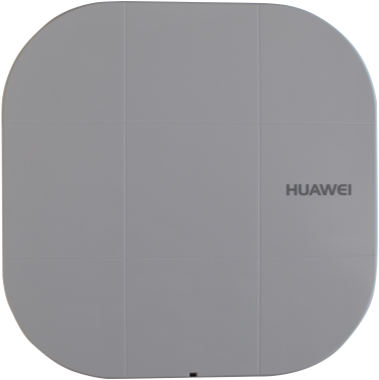
Huawei AP4050DE-M is an indoor 802.11ac Wave 2 access point with 2×2 MIMO, two spatial streams and simultaneous 2.4 GHz/5 GHz service. Its built-in smart antenna array targets signal coverage as terminals move; built-in Bluetooth supports positioning with eSight. The AP supports Fat, Fit and cloud management modes. Its hardware reference is 47 × 200 × 200 mm, 0.7 kg and IP41, with 12 V DC or IEEE 802.3at/af power input and a region-qualified maximum consumption of 16.40 W.
AP4050DN-S
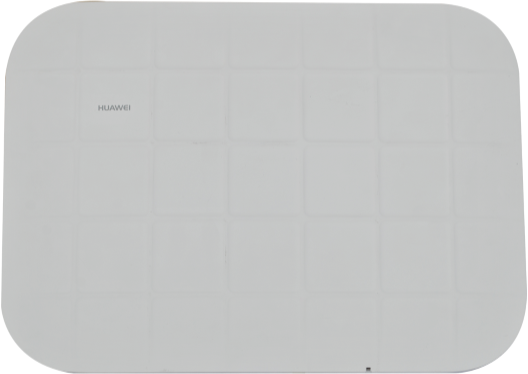
Huawei AP4050DN-S is an indoor dual-band 802.11ac Wave 2 access point with 2×2 MIMO, two spatial streams and MU-MIMO. Its built-in omnidirectional dual-band antenna serves 2.4 GHz and 5 GHz simultaneously. One Gigabit GE/PoE_IN connection handles the wired uplink and PoE input; a separate console port supports maintenance. The hardware supports 12 V DC or IEEE 802.3af/at PoE, with 12.1 W region-qualified maximum consumption. Confirm the power source, management mode and supplied accessories in the quote.
AP4050DN-HD
Huawei AP4050DN-HD is an indoor 802.11ac Wave 2 access point with 2 × 2 MIMO and two spatial streams. Its built-in dual-band directional antenna has a 30-degree beamwidth, with reference gains of 13 dBi at 2.4 GHz and 10 dBi at 5 GHz. Two Gigabit Ethernet ports have distinct roles: GE0 accepts PoE input and GE1 provides PoE output to downstream devices. Check the powering mode, antenna orientation and intended high-density coverage area in the design.
AP4050DN Huawei AP4000 Series Indoor 2X2 Dual Band Access Points
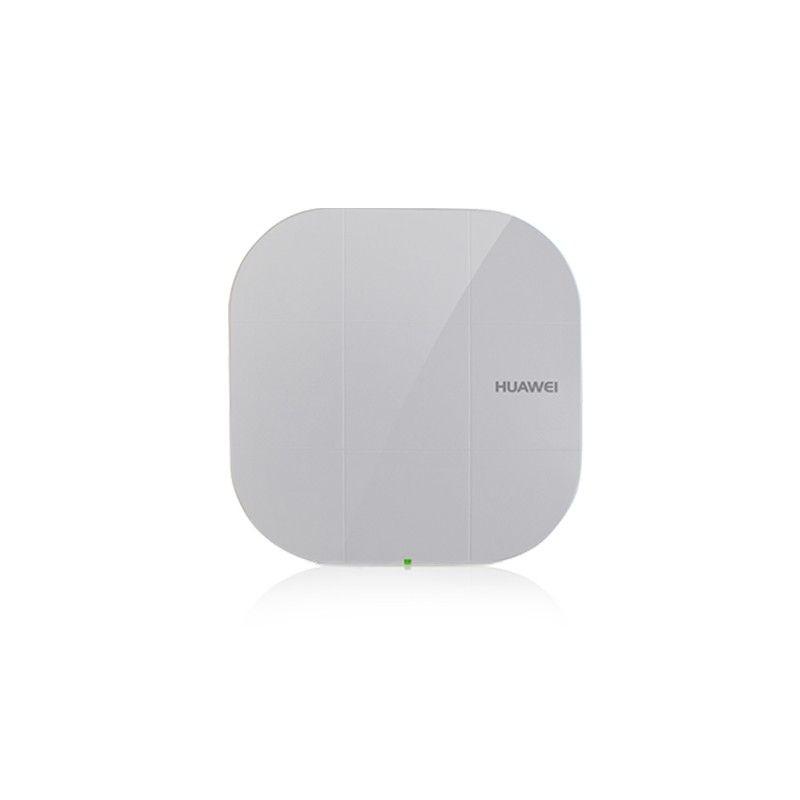
AP4050DN has the following distinguishing entries in the manufacturer specification. Radio port/built-in antenna: Built-in omnidirectional antenna, dual-band, 2x2 MIMO. Radio power (Max): two.4G: 23dBm(Max) 5G: 23dBm(Max) (note: this is MIMO total radio power, the same as: two.4G: 20dBm/chain(Max) 5G : 20dBm/chain(Max)). Ethernet ports: GE(RJ45) x one, 1000base-T, 10M/100M/1000M auto negotiation speed;. Power consumption of the device: twelve.1W. MIMO: 2x2Multi-input Multi-output, for example, four*four:four indicates that 4SU-4MU is supported..