
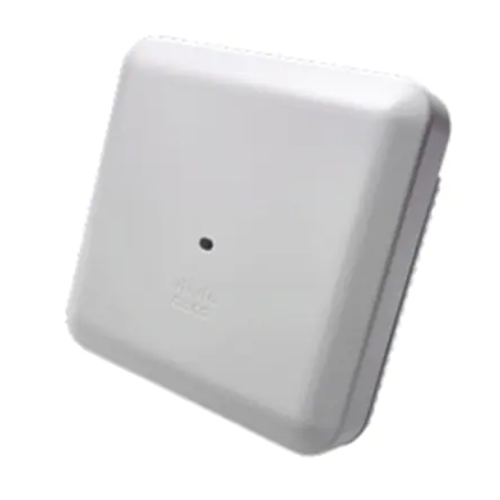
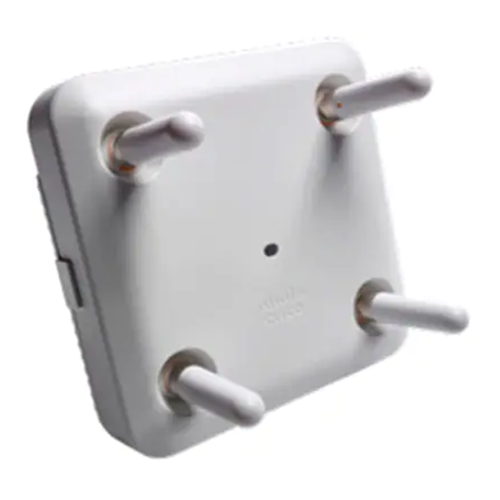
Cisco AIR-AP3802I-C-K9 802.11ac Wave 2 AP Indoor Compact Model

- 763 412 7282
- +86 010 69614620
AIR-AP3802I-C-K9 Overview
AIR-AP3802I-C-K9 exact order identity
AIR-AP3802I-C-K9 is a controller-based Cisco Aironet 3800 Series 802.11ac Wave 2 access-point order. The PID selects the 3802I access point with integrated antennas, single-unit fixed-domain K9 order and regulatory token C.
Antenna architecture
Cisco integrates the antennas into the 3802I enclosure, so no external antenna is selected by this PID. Retain enclosure orientation, bracket, mounting height and measured coverage against the approved RF survey.
Quantity and configuration boundary
This K9 line is a single access-point order. Antenna, mounting, power and controller dependencies remain separate bill-of-material decisions.
C regulatory evidence
The domain token is not a country name. Preserve the C-domain destination approval with the exact PID, serial and controller country so a nearby domain cannot be substituted silently.
Use final receiving approval as the C-domain checkpoint. Match the authorized quotation, carton label, chassis serial, destination and controller country before release. Preserve the dated Cisco lookup with those fields. A later replacement or site transfer must create a new decision rather than inheriting the old location's approval from the asset record.
Controller, PoE and uplink boundary
Validate the exact controller release and CAPWAP join before deployment. Preserve negotiated PoE, multigigabit Ethernet rate, cable certification and error counters; family capability does not prove the installed switch and cable path achieve that rate.
Lifecycle and migration decision
Cisco lists 2022-10-31 as end of sale and 2027-10-31 as last support for the Aironet 3800 Series, with Catalyst 9130AX as the replacement direction. Available inventory does not extend those dates.
Deployment evidence worksheet
Survey-to-install reconciliation
Attach the approved RF survey location, mounting height, orientation, expected client density, channel width and neighboring-radio assumptions to the order. After installation, compare measured coverage and interference with that design. If ceiling construction, antenna placement or obstructions changed, document the deviation and repeat the affected measurements. This provides a site-specific acceptance reason for the exact unit instead of relying on a family data sheet alone. Tie the post-install RF result to the exact integrated or external antenna architecture.
Country approval retention
Save the Cisco compliance lookup result, lookup date, deployment country, approved regulatory token and reviewer. If the destination changes, stop and repeat the approval rather than moving the unit on the strength of an earlier purchase. Compare the controller country setting and available channels with the retained evidence. Regulatory eligibility is a deployment condition and cannot be inferred from connector fit, stock location or a similar-looking part number. Save the Cisco country lookup and controller country setting with the exact regulatory token.
Controlled spare policy
If purchased as a spare, name the protected site population, compatible controller image, storage location, storage conditions and periodic power-on test. Confirm that regulatory token, antenna architecture and mounting parts match the population it protects. Set a final-use review date. A stored unit can become unsuitable while untouched because controller software, country approval, certificates or network architecture may change. Test stored spares against controller release, PoE, domain, antenna and mounting dependencies.
Roaming acceptance
Define the neighboring access points and client types used for roaming validation. Record handoff behavior, interruption observed, authentication result and controller events along the intended movement path. Compare the outcome with the site's design target rather than declaring success from static association. Where this unit replaces an older AP, test both entry and exit from its cell so a local improvement does not hide a boundary problem. Document roaming path, neighboring cells, client type and controller events at each cell boundary.
Monitoring handover
Assign owners for AP reachability, controller join failures, radio utilization, client health and switch-port errors. Confirm that the exact serial appears in inventory and monitoring, then test the alert path. Record dashboard object, notification route and escalation owner. Telemetry that is not tied to an owned asset does not provide a reliable service baseline and will not support later comparison after channel or software changes. Monitor serial, CAPWAP state, radio health, Ethernet errors, PoE and client experience under one owner.
Security baseline
Retain the approved controller policy, management authorization, certificate or trust workflow, client authentication test and logging destination. Confirm behavior on the deployed controller software instead of promising a protocol from the hardware family name. Remove temporary onboarding access and verify administrative reachability after handover. This keeps product identity separate from software-dependent security claims. Record only security capabilities proven on the deployed controller and software release.
Capacity observation
Define the expected concurrent clients, application mix, airtime utilization and channel-width assumptions for this location. After commissioning, capture radio utilization, retry behavior and representative throughput during a meaningful load period. Compare the observation with the survey design and state any shortfall. A peak link rate from a data sheet is not a site capacity result and should not replace measured operating evidence. Use measured airtime, retries and client performance instead of maximum family PHY rates.
Fault-domain separation
Build the acceptance record so power, wired link, controller join, radio state, authentication and application reachability can be reviewed independently. Preserve timestamps and device identifiers across switch and controller logs. When a test fails, identify the failing boundary before replacing hardware. This avoids classifying a cable, policy or controller problem as an access-point defect and creates evidence that can be reused during support escalation. Use synchronized switch, AP and controller timestamps to isolate power, CAPWAP, RF and authentication faults.
Related Aironet 3802 orders
- AIR-AP3802E-C-K9 - compare antenna, quantity, configuration and domain evidence.
- AIR-AP3802E-ZK910 - compare antenna, quantity, configuration and domain evidence.
- AIR-AP3802E-E-K9 - compare antenna, quantity, configuration and domain evidence.
Official evidence: Cisco Aironet 3800 data sheet; Cisco getting-started guide; Cisco 3800 lifecycle bulletin; Cisco support page; and Cisco compliance lookup.
AIR-AP3802I-C-K9 Specification
| Exact model / SKU | AIR-AP3802I-C-K9 |
| Exact Cisco PID | AIR-AP3802I-C-K9 |
| Product family | Cisco Aironet 3800 Series |
| Wireless design | Controller-based 802.11ac Wave 2 access point |
| Antenna form | 3802I access point with integrated antennas |
| Order form | single-unit fixed-domain K9 order |
| Physical quantity | 1 |
| Regulatory-domain token | C |
| Country approval | Verify through Cisco's current compliance lookup |
| Uplink acceptance | Verify multigigabit switch port, cable certification, negotiated rate and errors |
| Lifecycle | End of sale 2022-10-31; last support 2027-10-31 |
| Migration family | Cisco Catalyst 9130AX Series Access Points |
| Source match | AIR-AP3802I-C-K9: 3802I access point with integrated antennas, single-unit fixed-domain K9 order, domain token C |
| Official manufacturer reference | Cisco Aironet 3800 official data sheet |
AIR-AP3802I-C-K9 Warranty
 | Product Quotation |  | Condition and Packaging |
 | Technical Support Enquiry |  | Returns and Replacement |
 | Shipping Arrangements |  | Warranty Terms |
AIR-AP3802I-C-K9 FAQ
What is AIR-AP3802I-C-K9?
Cisco AIR-AP3802I-C-K9 802.11ac Wave 2 AP Indoor Compact Model is a CISCO Aironet 3800 Series Access Points product supplied by YYST Global for enterprise IT procurement and infrastructure projects.
What wireless design is listed for AIR-AP3802I-C-K9?
For AIR-AP3802I-C-K9, the manufacturer specification lists wireless design as Controller-based 802.11ac Wave 2 access point.
What antenna form is listed for AIR-AP3802I-C-K9?
For AIR-AP3802I-C-K9, the manufacturer specification lists antenna form as 3802I access point with integrated antennas.
Is AIR-AP3802I-C-K9 available from YYST Global?
Contact YYST Global to confirm availability for AIR-AP3802I-C-K9, the required quantity, exact configuration, delivery destination and current lead time before ordering. A product listing does not confirm current inventory.
What is the price of AIR-AP3802I-C-K9?
Please request a quote for AIR-AP3802I-C-K9. Final pricing depends on stock, quantity, configuration and delivery destination.
Related products
Related AIR-AP3802I-C-K9
Cisco AIR-AP3802I-H-K9C Configurable Indoor Access Point
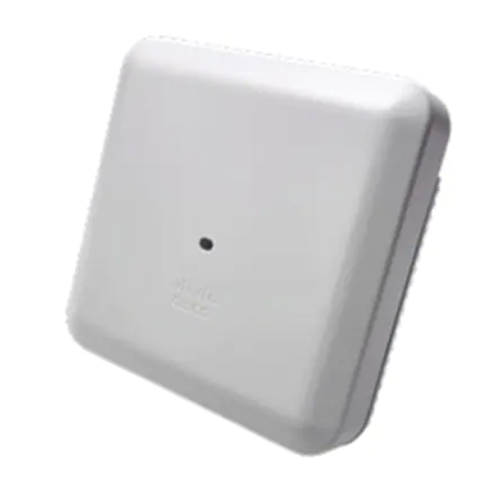
AIR-AP3802I-H-K9C is an internal-antenna Aironet 3802i configurable order. Its two Ethernet connections are different: one multigigabit port and one Gigabit AUX port, not two 5-Gbps ports.
AIR-AP3802I-F-K9 - Cisco 3800I Access Points Model with Integrated Antennas
AIR-AP3802I-F-K9 is a Cisco Aironet 3802I access point with integrated antennas, supplied as a single-unit fixed-domain K9 order with regulatory-domain token F. Verify country approval, controller software, PoE, multigigabit cabling, antenna design and lifecycle.
Cisco AIR-AP3802I-B-K9 Aironet 3802I B-Domain Indoor Access Point
AIR-AP3802I-B-K9 is a Cisco Aironet 3802I controller-based indoor 802.11ac access point with internal antennas and B regulatory domain. Cisco documents a multigigabit primary Ethernet interface supporting 100/1000/2500/5000 speeds plus an auxiliary 100/1000BASE-T port.
AIR-AP3802I-F-K9C - Cisco Aironet Mobility Express 3800 Series Access Point Configurable
AIR-AP3802I-F-K9C is a Cisco Aironet 3802I integrated-antenna access point, supplied as a configurable single-unit order with regulatory token F. Validate country approval, controller software, PoE, mGig cabling and the exact antenna architecture.
Cisco AIR-AP3802I-S-K9 Aironet Access Point with internal antennas
AIR-AP3802I-S-K9 is a Cisco Aironet 3802I access point with integrated antennas, supplied as a single-unit fixed-domain K9 order with regulatory-domain token S. Verify country approval, controller software, PoE, multigigabit cabling, antenna design and lifecycle.
AIR-AP3802I-T-K9 Cisco Aironet 3800i Access Point Indoor environments
AIR-AP3802I-T-K9 is a Cisco Aironet 3802I access point with integrated antennas, supplied as a single-unit fixed-domain K9 order with regulatory-domain token T. Verify country approval, controller software, PoE, multigigabit cabling, antenna design and lifecycle.
AIR-AP3802I-Q-K9
AIR-AP3802I-Q-K9 is a Cisco Aironet 3802I access point with integrated antennas, supplied as a single-unit fixed-domain K9 order with regulatory-domain token Q. Verify country approval, controller software, PoE, multigigabit cabling, antenna design and lifecycle.
Cisco AIR-AP3802I-N-K9 802.11ac Wave 2 Internal Antenna Access Point
AIR-AP3802I-N-K9 is a Cisco Aironet 3802I access point with integrated antennas, supplied as a single-unit fixed-domain K9 order with regulatory-domain token N. Verify country approval, controller software, PoE, multigigabit cabling, antenna design and lifecycle.