
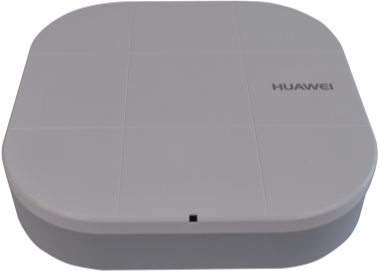
Huawei R450D Remote Unit

- 763 412 7282
- +86 010 69614620
R450D Overview
Buy the R450D as a remote unit in a central-AP design
The manufacturer identifies R450D as an RU in its agile distributed Wi-Fi solution. The RU is deployed indoors, connected to a central AP and managed by that central AP. Keep the central device and its software relationship on the bill of materials and acceptance record. The quotation should identify which existing central-AP deployment the RU is intended to extend, together with the commissioning and recovery responsibilities.
Choose the direct central link or the documented PoE-switch path
Huawei’s exact usage scenario allows the central AP’s downlink GE interfaces to supply PoE and connect directly to RUs. It also describes attaching more RUs through a PoE switch, with network cables between the indoor RUs and the central AP. Agree the physical path, switch allocation and controller relationship before installation. The scenario does not specify an unlimited RU count, an arbitrary third-party central controller or a blanket maximum cable distance.
Keep the GE/PoE_IN connection distinct from the maintenance console
The R450D hardware chapter names a 10/100/1000M GE/PoE_IN interface for Ethernet and PoE input, and a separate console for configuration and management. Allocate the data path to GE/PoE_IN and the service terminal to the console. The factory-reset button restarts the device after the documented hold operation, so reset and recovery should be planned with the central-AP configuration rather than treated as a normal commissioning step.
Match the source and the 12.1 W reference to the installation
The power table specifies DC 12 V ±10% or IEEE 802.3af/at PoE, with 12.1 W maximum consumption qualified by local rules. Confirm the adapter and mains lead if DC is selected, or the PSE allocation if the central AP or switch supplies PoE. Those alternatives do not by themselves establish a hot-backup or priority rule. The quoted source and the actual receiving test should determine the site power arrangement.
Set the RU radio and client checks within the distributed design
The R450D characteristics include IEEE 802.11ac Wave 2 and operation on both 2.4 GHz and 5 GHz. Its internal dual-band omnidirectional antennas have 5 dBi reference gain per band, with a 23 dBm combined-power reference subject to regional settings. Huawei lists up to 256 users, explicitly dependent on the environment, and 16 VAPs per radio. Record the intended client load and coverage test through the central AP; those references do not guarantee application performance in every building.
Confirm the shallow enclosure and the indoor environmental scope
The exact housing reference is 35 × 170 × 170 mm in height, width and depth, with 0.41 kg weight and IP41. The −10°C to +50°C operating range applies at −60–1800 m; above 1800 m through 5000 m, the upper limit falls 1°C per 300 m. Humidity is 5–95% non-condensing. Match the mounting position and delivered label to the site, and interpret the single status indicator with Huawei’s startup, running, registration and fault descriptions.
Document/Firmware Download
R450D Specification
| Exact model | R450D |
| Deployment identity | Indoor remote unit for Huawei agile distributed Wi-Fi |
| Management dependency | Connected to and managed by a central AP; verify exact central device and software |
| Documented wiring choices | Direct central-AP downlink GE/PoE or an intervening PoE switch |
| Wireless standards | IEEE 802.11a/b/g/n/ac/ac Wave 2 |
| Frequency scope | 2.4 GHz and 5 GHz |
| Ethernet connection | GE/PoE_IN: 10/100/1000M; wired data and PoE input |
| Maintenance interface | Separate console, reset button and security slot |
| Power input | DC 12 V ±10% or IEEE 802.3af/at PoE |
| Maximum consumption reference | 12.1 W; local rules qualify the maximum |
| Antenna type | Built-in dual-band omnidirectional |
| Antenna gain reference | 5 dBi on each listed band |
| Combined transmit reference | 23 dBm per band; regional limits apply |
| Client/VAP references | Up to 256 users, environment-dependent; 16 VAPs per radio |
| Dimensions H × W × D | 35 × 170 × 170 mm |
| Reference weight | 0.41 kg |
| Device memory | 256 MB DDR3L; 64 MB NOR FLASH |
| Indoor environment | IP41; 5–95% non-condensing humidity |
| Operating temperature/altitude | −10 to +50°C at −60–1800 m; upper limit derates 1°C per 300 m above 1800 m through 5000 m |
R450D Warranty
 | Product Quotation |  | Condition and Packaging |
 | Return Eligibility |  | Returns and Replacement |
 | Shipping Arrangements |  | Warranty Terms |
R450D FAQ
What is R450D?
Huawei R450D Remote Unit is a HUAWEI Wireless product supplied by YYST Global for enterprise IT procurement and infrastructure projects.
What wireless standards is listed for R450D?
For R450D, the manufacturer specification lists wireless standards as IEEE 802.11a/b/g/n/ac/ac Wave 2.
What interfaces and ports does R450D provide?
For R450D, the manufacturer specification lists ethernet connection as GE/PoE_IN: 10/100/1000M; wired data and PoE input.
What are the power requirements for R450D?
For R450D, the manufacturer specification lists power input as DC 12 V ±10% or IEEE 802.3af/at PoE.
Is R450D available from YYST Global?
Contact YYST Global to confirm availability for R450D, the required quantity, exact configuration, delivery destination and current lead time before ordering. A product listing does not confirm current inventory.
Related products
Related R450D
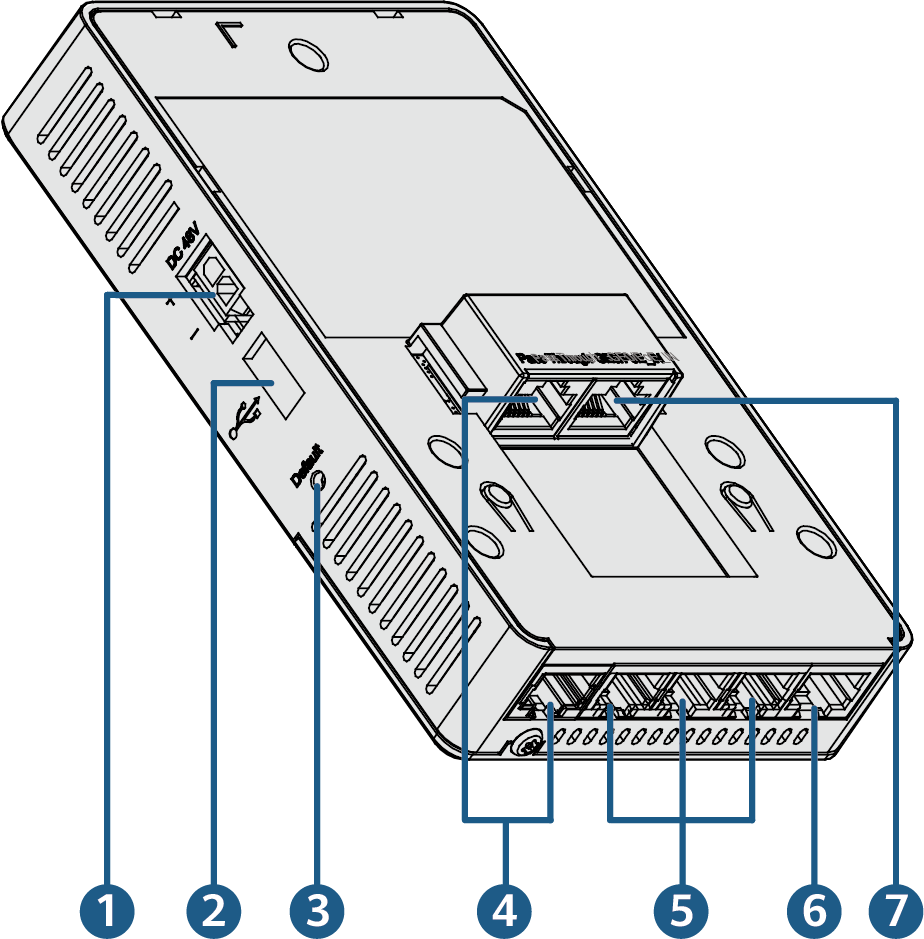
Huawei AP2050DN 802.11ac Wall-Plate Access Point 50082925
AP2050DN is Huawei part 50082925: an 802.11ac wall-plate AP with GE0 PoE input and GE1 data. Series interface illustration. Request a quote.

Huawei AC650-64AP WLAN Access Controller
AC650-64AP is a Huawei WLAN controller, part 02354JKA, with 10 GE ports, 2 SFP+ uplinks and a power adapter. Confirm AP rights and request a quote.
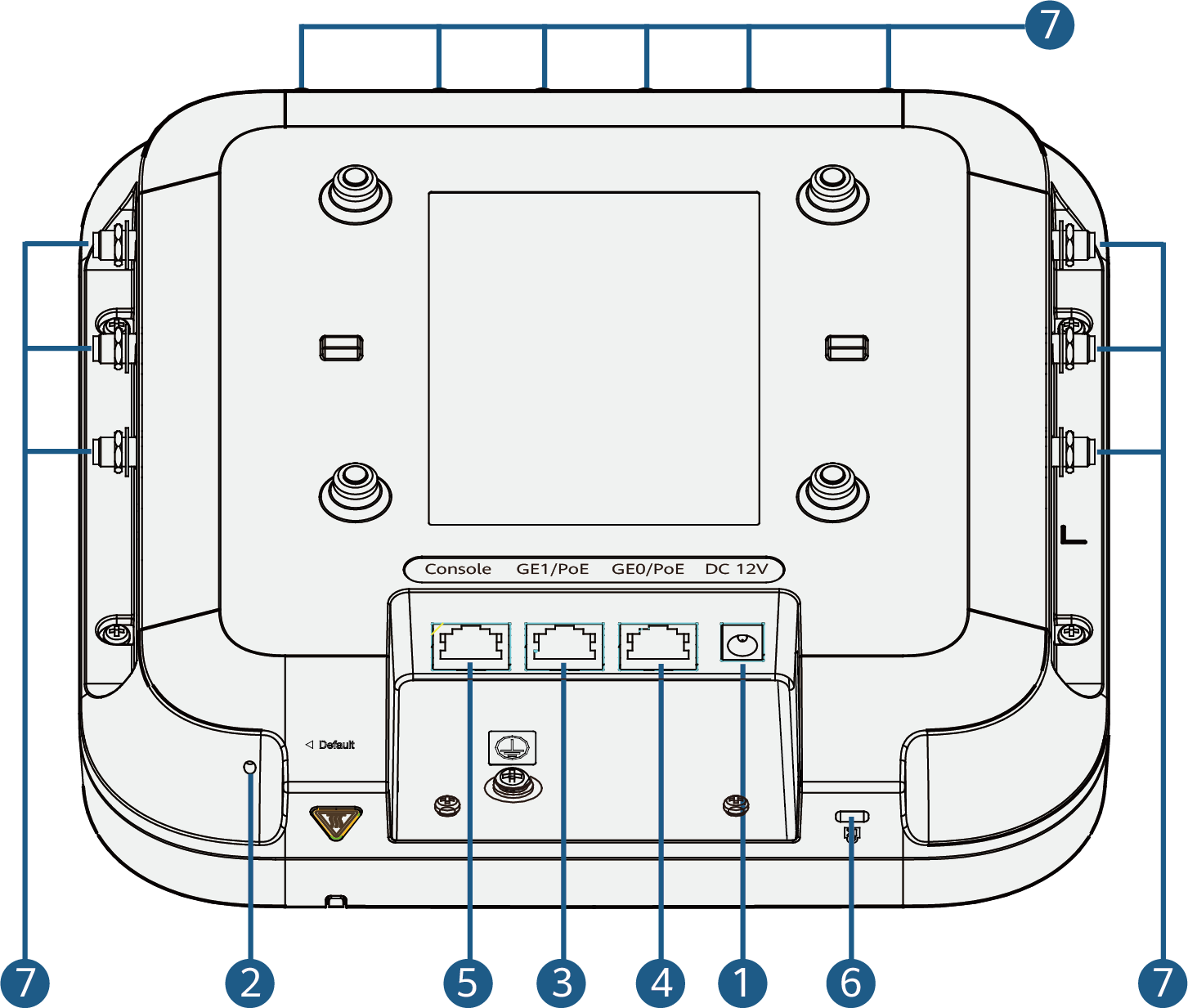
Huawei AP9330DN-DC Access Point Bundle
Huawei AP9330DN-DC is the AP9330DN distributed access-point bundle mapped to manufacturer part 02350CFD. Its exact order description includes an AC/DC adapter, indoor dual-frequency 802.11ac hardware and twelve external antenna ports. Huawei separately identifies the adapter-free AP9330DN mainframe as 02350CFC. The AP hardware uses RP-SMA-K connections and supports 12 V ±10% DC or IEEE 802.3at input; its named-model consumption reference is 19 W. Confirm the supplied adapter, destination plug, room antennas and feeder plan. The image illustrates the AP9330DN hardware and does not show or establish the complete offered bundle contents.
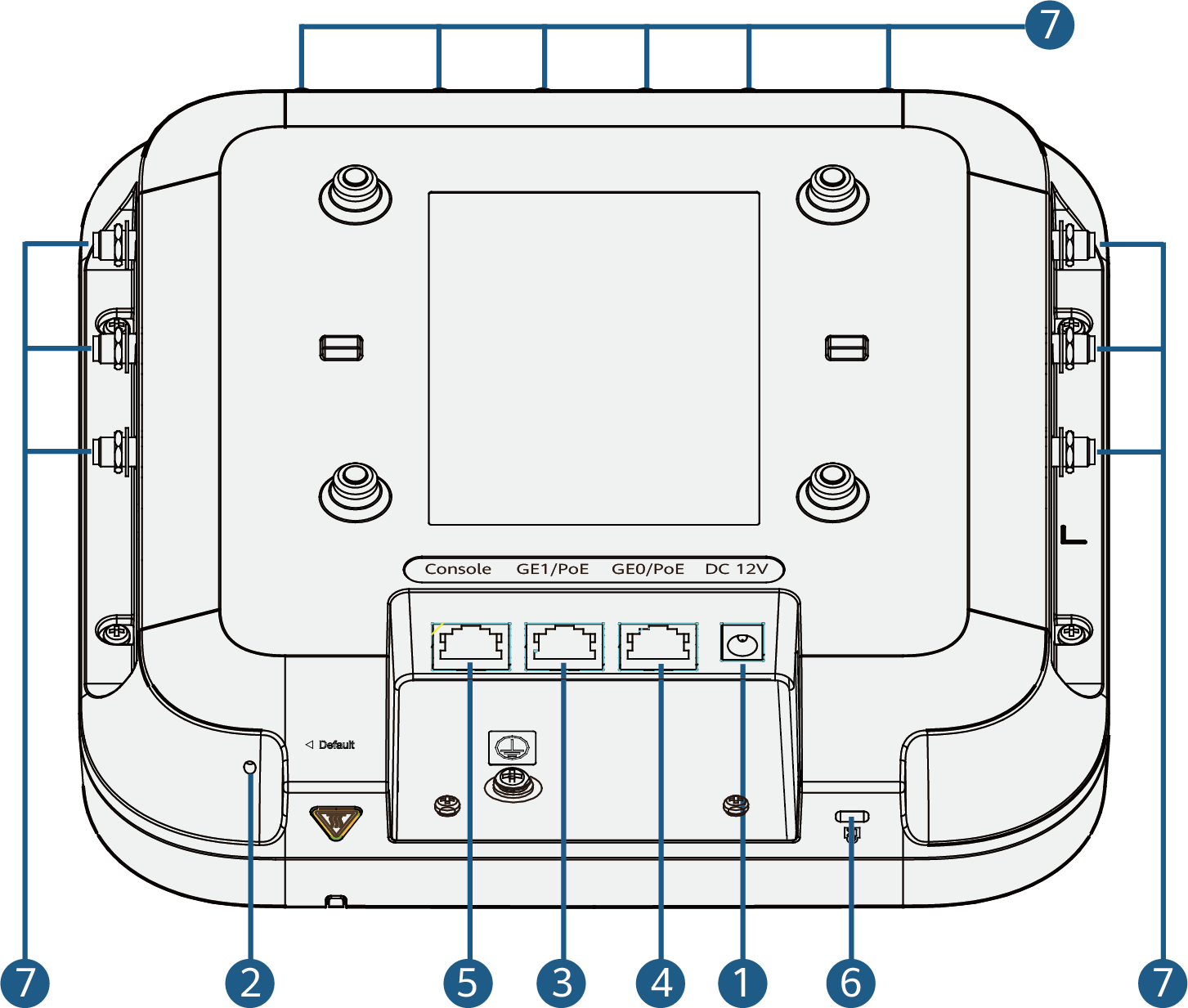
Huawei AP9330DN Distributed Access Point
Huawei AP9330DN is an indoor dual-band 802.11ac distributed access point with 12 external antenna connections. Huawei describes coverage for six rooms with two streams per room, subject to the planned antenna and feeder installation. Its antenna ports use RP-SMA-K connectors. The named-model specification lists 12 V ±10% DC or IEEE 802.3at PoE, a 19 W maximum-consumption reference, 53 × 220 × 220 mm dimensions and 1.3 kg weight. Order reference 02350CFC excludes an AC/DC adapter; 02350CFD is the adapter bundle. Confirm the offered order code and accessories in the quote. The image is original manufacturer interface artwork, not a supplied-unit photograph.
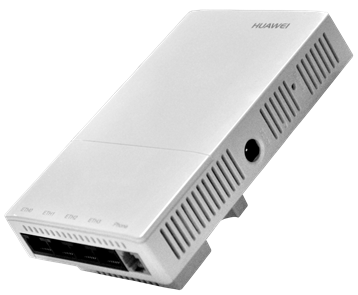
Huawei R240D Wall-Plate Remote Unit
Huawei R240D is an indoor wall-plate remote unit for a central-AP-managed agile distributed Wi-Fi system. Its room-facing ETH0–ETH3 interfaces run at 10/100M, while the GE/PoE uplink supports 10/100/1000M and PoE input. Huawei separately identifies phone connections for a POTS phone or modem and for a traditional PSTN. R240D accepts 12 V ±10% DC or IEEE 802.3af/at PoE, with an 8.7 W consumption reference. The manufacturer restricts this 86-type-box design to countries and regions supporting that box format and documents dual-band IEEE 802.11a/b/g/n/ac operation.
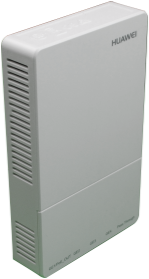
Huawei R250D-E Wall-Plate Remote Unit
Huawei R250D-E is a wall-plate remote unit connected to a central AP in Huawei agile distributed Wi-Fi. Its exact hardware chapter separates GE0/PoE_IN from GE1/PoE_OUT, provides GE2–GE4 Gigabit data connections, and lists a 48 V ±5% DC input alongside IEEE 802.3af/at PoE. A USB2.0 storage connection and an RJ45 cable pass-through support the room wiring arrangement. The documented 11.5 W consumption excludes USB and downstream PoE output power. R250D-E uses an 86 mm plate and dual-band IEEE 802.11ac Wave 2; it is not interchangeable with the simpler R250D port layout.
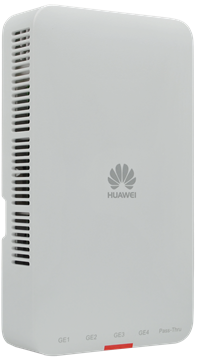
Huawei R251D Wall-Plate Remote Unit
Huawei R251D is an indoor wall-plate remote unit for Huawei agile distributed Wi-Fi, connected to and managed by a central AP. The base R251D requires IEEE 802.3af PoE input through GE0/PoE_IN and provides four GE1–GE4 Ethernet data ports plus RJ45 pass-through ports for transparent network or phone cabling. Huawei lists 11.5 W unit consumption, a 32.5 × 86 × 150 mm housing and 0.25 kg weight. The shared characteristics specify IEEE 802.11ac Wave 2 on 2.4 GHz and 5 GHz, smart antennas and installation in 86 mm, 120 mm or 118 mm junction boxes.
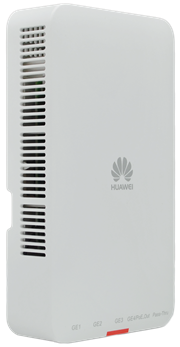
Huawei R251D-E Wall-Plate Remote Unit
Huawei R251D-E is an indoor wall-plate remote unit for agile distributed Wi-Fi, connected to and managed by a central AP. The E model requires IEEE 802.3at PoE input through GE0/PoE_IN, adds GE4/PoE_Out and a USB2.0 storage interface, and also provides GE1–GE3 Ethernet ports and separate RJ45 pass-through ports. Huawei lists 11.5 W unit consumption excluding the USB and PoE_OUT output power. The shared characteristics describe dual-band IEEE 802.11ac Wave 2, smart antennas and installation in 86 mm, 120 mm or 118 mm junction boxes; verify the exact mounting and central-AP arrangement.