
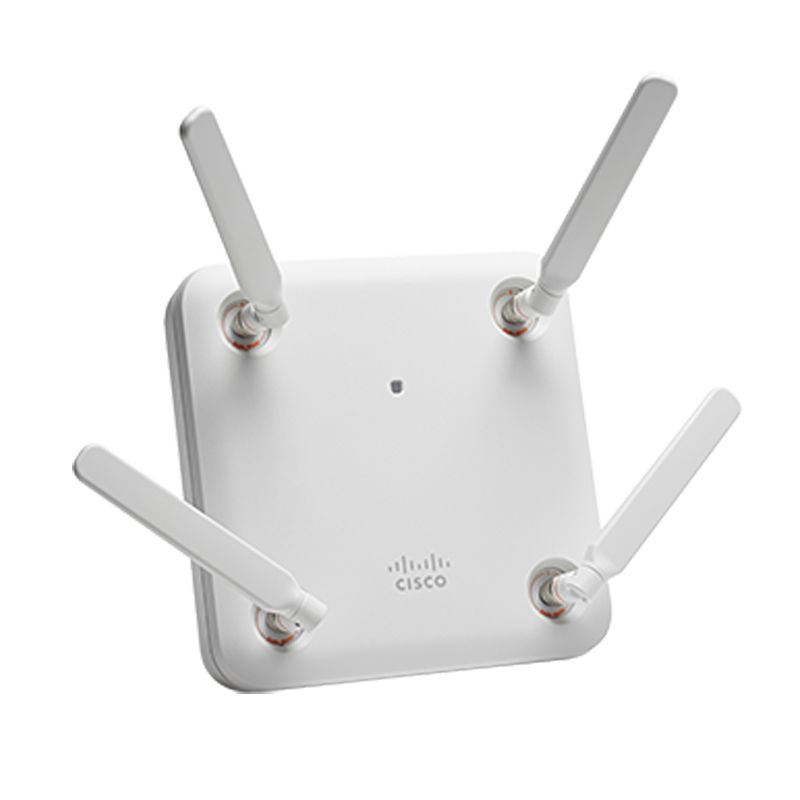
AIR-AP1852E-D-K9 Cisco Aironet 1852e 802.11ac Wave 1 or Wave 2 AP

- 763 412 7282
- +86 010 69614620
AIR-AP1852E-D-K9 Overview
AIR-AP1852E-D-K9 exact order identity
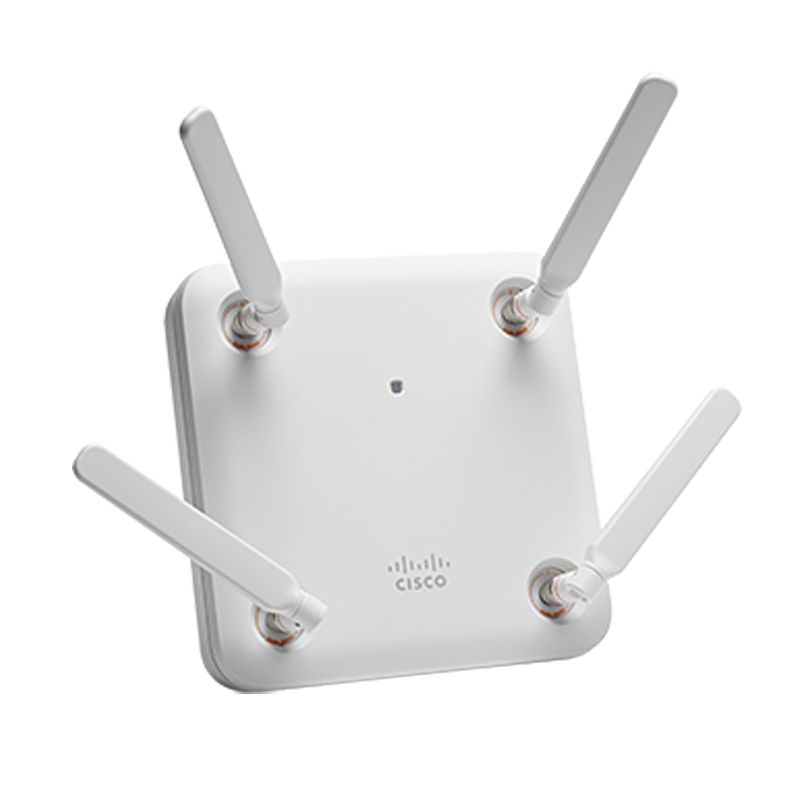
AIR-AP1852E-D-K9 is a 1852e indoor access point for separately purchased external antennas in the Cisco Aironet 1850 Series. This exact SKU combines regulatory-domain token D with a single-unit fixed-domain K9 order. The platform is a dual-band 802.11ac Wave 2 access point with four 5 GHz spatial streams in single-user operation and three in multiuser operation.
Antenna and environmental boundary
Cisco states that external antennas are sold separately and certifies the platform for antenna gains up to 6 dBi at both 2.4 and 5 GHz. Record the approved Cisco antenna part numbers, four radio paths, gain, pattern, cable loss, connectors and mounting orientation. A compatible connector alone is not regulatory or RF-design evidence.
Order and controller boundary
Cisco lists K9 as a controller-based dual-band 802.11ac Wave 2 order. Match the complete fixed-domain PID at receiving. Create one serial-level asset record and stage CAPWAP join, controller software, country setting and radio operation before production release.
D regulatory-domain evidence
Cisco lists this profile as 2.4 GHz channels 1-11; 5 GHz blocks at 5.180-5.320 and 5.745-5.825 GHz. The D profile uses separated lower and upper 5 GHz blocks with no documented middle block. A channel plan that assumes a continuous 5 GHz range is therefore not suitable evidence for this order. Verify that the controller presents the two expected 5 GHz groups and excludes an unapproved middle range. Store the result with the deployment country lookup and the exact D-domain quotation.
Procurement inference: the separation between lower and upper 5 GHz groups should be represented as two planning pools. During acceptance, compare utilization and interference in each pool rather than averaging all 5 GHz observations together. If a replacement AP was previously using a middle-range channel under another profile, document the revised reuse plan before treating the D-domain unit as a direct substitution.
Power and interface boundary
The 1852 provides a PoE Gigabit uplink and a Gigabit AUX port for link aggregation. Cisco states that 802.3af disables AUX and USB on both antenna forms and reduces the 1852e 2.4 GHz radio from 3x4 to 2x3. Record negotiated power before promising the complete interface and radio state.
Deployment evidence worksheet
Ethernet and cabling proof
Preserve the permanent-link test, patch-lead identities, switch port, negotiated Ethernet rate and error counters. Investigate pair faults, excessive length or rate fallback before wireless acceptance begins. A link light only proves connectivity at some rate; it does not demonstrate the intended uplink performance. Tie the cable result to the AP serial so a later throughput problem can be separated from radio, controller and wired-path causes. The platform has one PoE Gigabit interface and one Gigabit AUX interface used for link aggregation, so preserve both link states and the power condition under which AUX is available.
Serial-level asset control
Capture chassis serial, base MAC address, carton reference, deployment site, controller assignment and asset owner. Reconcile the identifiers against the purchase line before activation. Multi-unit cartons require an entry for every physical access point; a carton SKU alone cannot show which unit was installed, held as a spare or returned. This record is also needed to trace support entitlement, replacement history and monitoring ownership. If the product came from a ten-unit pack, the 1852 carton identity must be expanded into ten individual records before support, return or replacement handling.
Controlled spare policy
If purchased as a spare, name the protected site population, compatible controller image, storage location, storage conditions and periodic power-on test. Confirm that regulatory token, antenna architecture and mounting parts match the population it protects. Set a final-use review date. A stored unit can become unsuitable while untouched because controller software, country approval, certificates or network architecture may change. A spare 1852 must be checked against the protected controller release, certificate behavior, regulatory domain, antenna form and 2027 support cutoff before assignment.
Monitoring handover
Assign owners for AP reachability, controller join failures, radio utilization, client health and switch-port errors. Confirm that the exact serial appears in inventory and monitoring, then test the alert path. Record dashboard object, notification route and escalation owner. Telemetry that is not tied to an owned asset does not provide a reliable service baseline and will not support later comparison after channel or software changes. Monitoring should identify the 1852 serial, controller object, both Ethernet interfaces, radio health and the team responsible for end-of-support migration.
Replacement dependency map
Map this unit to controller, licenses, authentication services, switch power, cable, bracket, antenna design and monitoring objects. For an end-of-sale platform, state which dependencies can be reused by the planned Catalyst migration and which require change. A nominal access-point replacement can fail when the surrounding platform was never inventoried. Keep the map with the asset rather than only in a one-time project file. Cisco names the Catalyst 9115AX family as the migration option in the lifecycle bulletin; map controller, power, cabling, mount and antenna changes before replacement.
Receiving inspection
At receipt, compare model label, regulatory token, antenna form, quantity, serials and visible condition with the authorized order. Photograph labels before cartons are separated. Quarantine shortages, mixed units, damaged connectors or unapproved substitutions. Do not rely on a distributor description as evidence that the exact Cisco order arrived. Close the inspection only when every physical unit is accounted for. Receiving inspection should distinguish the internal-antenna 1852i from the external-antenna 1852e and should verify all carton quantities before labels are separated.
Fault-domain separation
Build the acceptance record so power, wired link, controller join, radio state, authentication and application reachability can be reviewed independently. Preserve timestamps and device identifiers across switch and controller logs. When a test fails, identify the failing boundary before replacing hardware. This avoids classifying a cable, policy or controller problem as an access-point defect and creates evidence that can be reused during support escalation. Use controller, switch and client timestamps to separate a PoE/AUX limitation, CAPWAP issue, RF condition and authentication failure before declaring a hardware defect.
Handover completeness
The handover package should include exact order identity, destination approval, serial record, controller evidence, switch port, mounting or antenna record, user-path tests and named operational owners. Review the package with the receiving team and list unresolved exceptions. A unit is not operationally accepted when important evidence remains only in installer notes, email attachments or an unowned temporary dashboard. The final handover should include the exact PID, regulatory approval, serial, antenna or mounting record, power mode, both Ethernet interfaces and lifecycle owner.
Lifecycle decision
Cisco ended sale of the Aironet 1850 Series on 1 May 2022, ended software maintenance on 1 May 2023 and lists 30 April 2027 as the last support date. Cisco identifies Catalyst 9115AX as the migration family. Available inventory does not extend those milestones.
Related Aironet 1852 order records
- AIR-AP1852E-D-K9C - compare order form and domain evidence.
- AIR-AP1852I-SK910C - compare antenna form and domain evidence.
- AIR-AP1852I-KK910C - compare antenna form and domain evidence.
Official evidence: Cisco Aironet 1850 Series data sheet; Cisco Aironet 1850 hardware guide; Cisco Aironet 1850 lifecycle bulletin; and Cisco wireless compliance tool.
AIR-AP1852E-D-K9 Specification
| Exact model / SKU | AIR-AP1852E-D-K9 |
| Exact Cisco PID | AIR-AP1852E-D-K9 |
| Product family | Cisco Aironet 1850 Series |
| Wireless design | 802.11ac Wave 2; 4x4:4 single-user and 4x4:3 multiuser at 5 GHz |
| Antenna form | External antennas, sold separately |
| Published antenna limit | Certified for antenna gains up to 6 dBi at 2.4 and 5 GHz |
| Order form | single-unit fixed-domain K9 order |
| Physical quantity | 1 |
| Regulatory-domain token | D |
| Cisco-listed channel profile | 2.4 GHz channels 1-11; 5 GHz blocks at 5.180-5.320 and 5.745-5.825 GHz |
| Interfaces | PoE Gigabit uplink; Gigabit AUX for link aggregation |
| 802.3af effect | AUX and USB disabled; 1852e 2.4 GHz radio reduces from 3x4 to 2x3 |
| Lifecycle | End of sale 2022-05-01; software maintenance ended 2023-05-01; last support 2027-04-30 |
| Migration family | Cisco Catalyst 9115AX |
| Source match | AIR-AP1852E-D-K9: 1852E, domain D, single-unit fixed-domain K9 order, quantity 1 |
| Official manufacturer reference | Cisco Aironet 1850 exact lifecycle bulletin |
AIR-AP1852E-D-K9 Warranty
 | Product Quotation |  | Condition and Packaging |
 | Technical Support Enquiry |  | Returns and Replacement |
 | Shipping Arrangements |  | Warranty Terms |
AIR-AP1852E-D-K9 FAQ
What is AIR-AP1852E-D-K9?
AIR-AP1852E-D-K9 Cisco Aironet 1852e 802.11ac Wave 1 or Wave 2 AP is a CISCO Aironet 1850 Series Access Points product supplied by YYST Global for enterprise IT procurement and infrastructure projects.
What wireless or client capacity is listed for AIR-AP1852E-D-K9?
For AIR-AP1852E-D-K9, the manufacturer specification lists wireless design as 802.11ac Wave 2; 4x4:4 single-user and 4x4:3 multiuser at 5 GHz.
What interfaces and ports does AIR-AP1852E-D-K9 provide?
For AIR-AP1852E-D-K9, the manufacturer specification lists interfaces as PoE Gigabit uplink; Gigabit AUX for link aggregation.
Is AIR-AP1852E-D-K9 available from YYST Global?
Contact YYST Global to confirm availability for AIR-AP1852E-D-K9, the required quantity, exact configuration, delivery destination and current lead time before ordering. A product listing does not confirm current inventory.
What is the price of AIR-AP1852E-D-K9?
Please request a quote for AIR-AP1852E-D-K9. Final pricing depends on stock, quantity, configuration and delivery destination.
Related products
Related AIR-AP1852E-D-K9
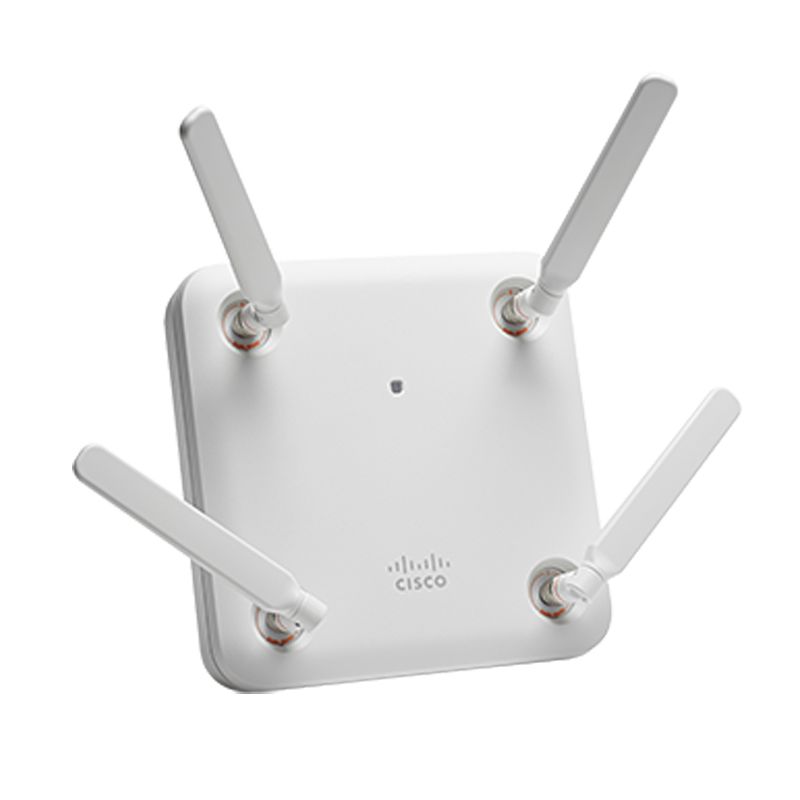
AIR-AP1852E-T-K9 Cisco Aironet 1852e Dual-band 4x4 MIMO Access Point
AIR-AP1852E-T-K9 is a 1852e indoor access point for separately purchased external antennas, supplied as a single-unit fixed-domain K9 order for regulatory-domain token T. Verify destination approval, controller software, PoE mode, exact quantity, antenna or mounting bill of materials and the 30 April 2027 support cutoff before purchase.
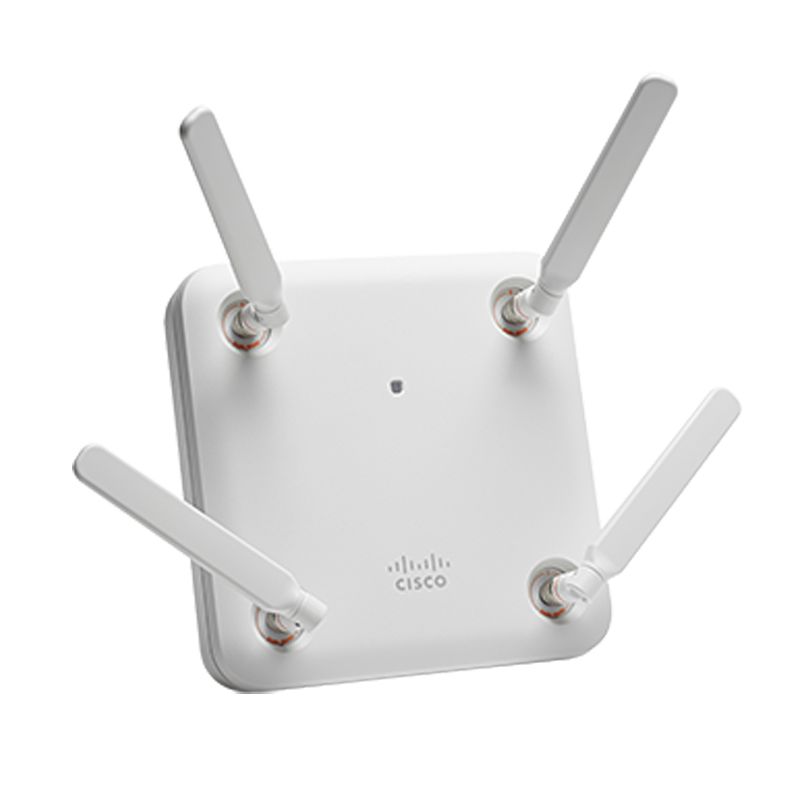
AIR-AP1852E-Q-K9 Cisco Aironet 1852e 4x4 MIMO Access Point
AIR-AP1852E-Q-K9 is a 1852e indoor access point for separately purchased external antennas, supplied as a single-unit fixed-domain K9 order for regulatory-domain token Q. Verify destination approval, controller software, PoE mode, exact quantity, antenna or mounting bill of materials and the 30 April 2027 support cutoff before purchase.
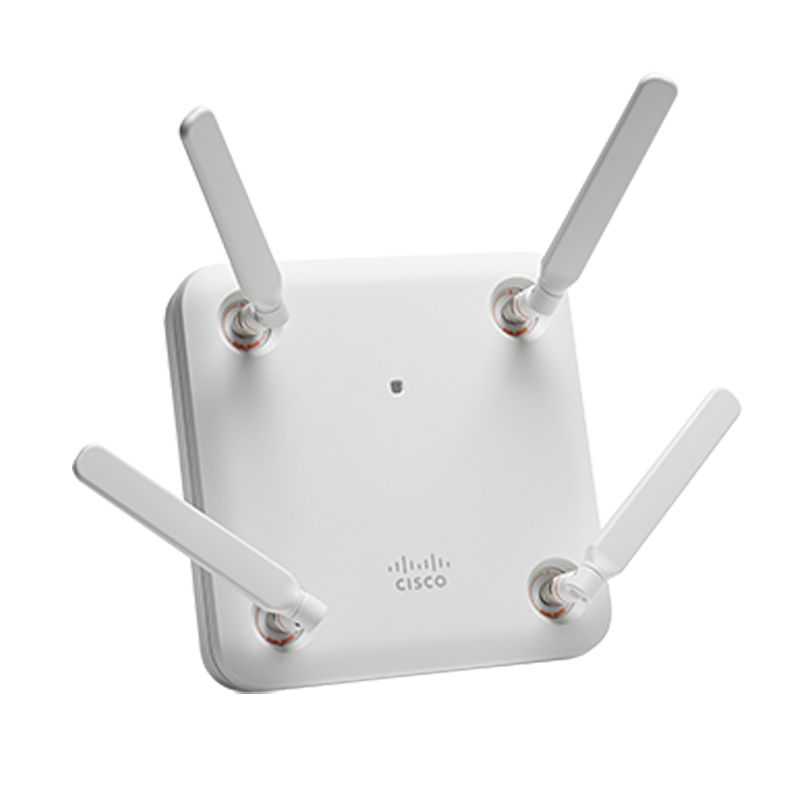
AIR-AP1852E-N-K9 Cisco Aironet 1852e Enterprise-class 4x4 MIMO AP
AIR-AP1852E-N-K9 is a 1852e indoor access point for separately purchased external antennas, supplied as a single-unit fixed-domain K9 order for regulatory-domain token N. Verify destination approval, controller software, PoE mode, exact quantity, antenna or mounting bill of materials and the 30 April 2027 support cutoff before purchase.
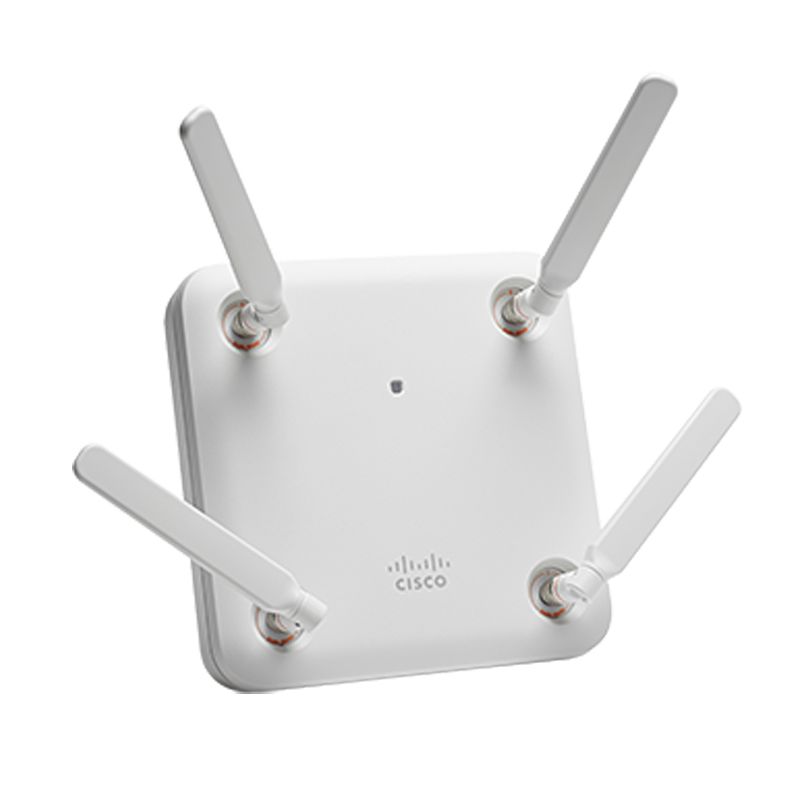
AIR-AP1852E-F-K9C Cisco Aironet 1852e 802.11ac Wave 2 4x4 MIMO AP
AIR-AP1852E-F-K9C is a 1852e indoor access point for separately purchased external antennas, supplied as a single-unit configurable K9C order for regulatory-domain token F. Verify destination approval, controller software, PoE mode, exact quantity, antenna or mounting bill of materials and the 30 April 2027 support cutoff before purchase.
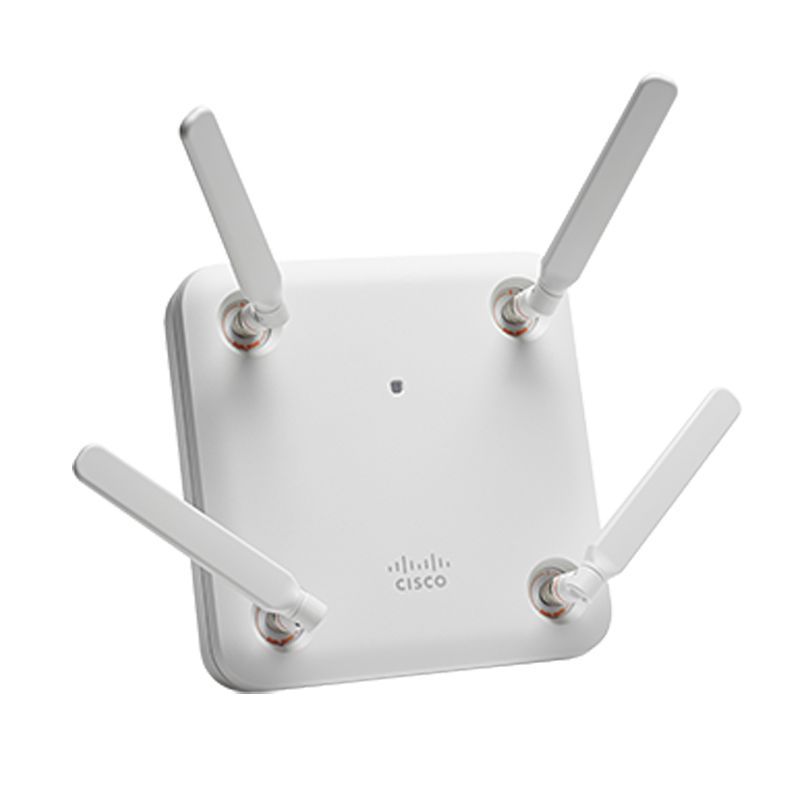
AIR-AP1852E-E-K9 Cisco Aironet 1852e WiFi 5 Access Points
AIR-AP1852E-E-K9 is a 1852e indoor access point for separately purchased external antennas, supplied as a single-unit fixed-domain K9 order for regulatory-domain token E. Verify destination approval, controller software, PoE mode, exact quantity, antenna or mounting bill of materials and the 30 April 2027 support cutoff before purchase.
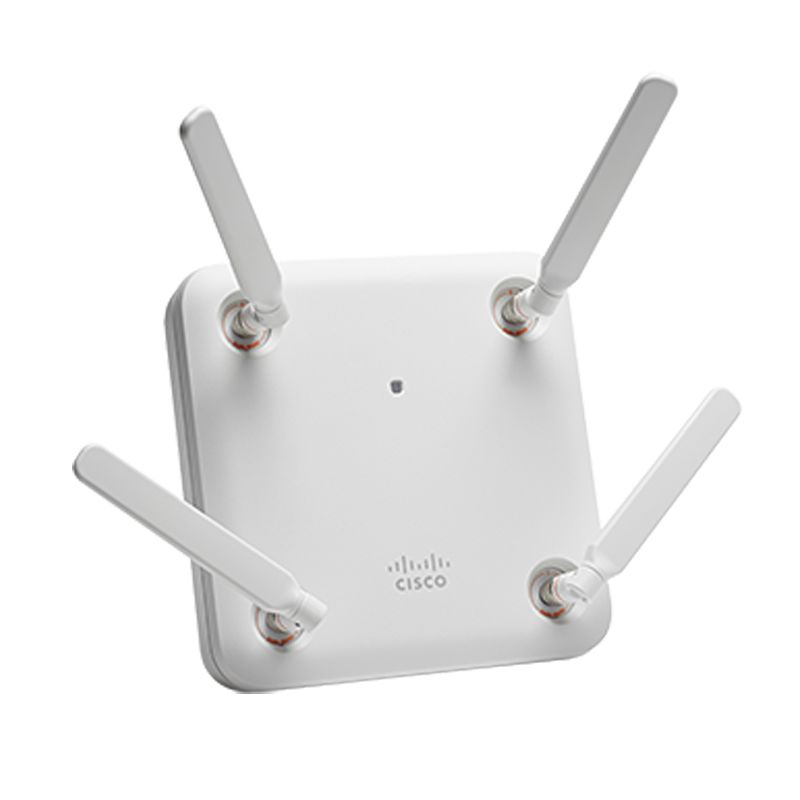
AIR-AP1852E-A-K9C Cisco Aironet 1852e 1.733Gbps Thoughput AP
AIR-AP1852E-A-K9C is a 1852e indoor access point for separately purchased external antennas, supplied as a single-unit configurable K9C order for regulatory-domain token A. Verify destination approval, controller software, PoE mode, exact quantity, antenna or mounting bill of materials and the 30 April 2027 support cutoff before purchase.
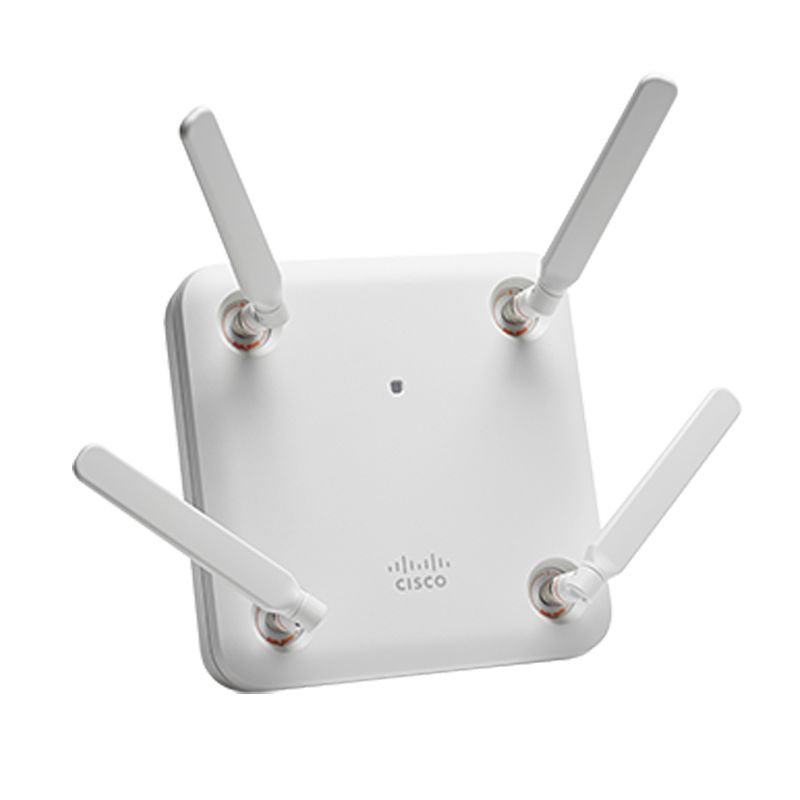
Cisco AIR-AP1852E-UXK9 Aironet 1852E Universal-Domain Access Point
AIR-AP1852E-UXK9 is Cisco's single-unit Aironet 1852E Universal Domain access point with external antennas; the external-antenna design requires a separately validated antenna and RF plan.
AIR-AP1852E-E-K9C Cisco Aironet 1852e Dual-band 4x4 MIMO AP
AIR-AP1852E-E-K9C: Configurable AP and antenna package rollback. Verify the exact PID, regulatory state and acceptance evidence before purchase.